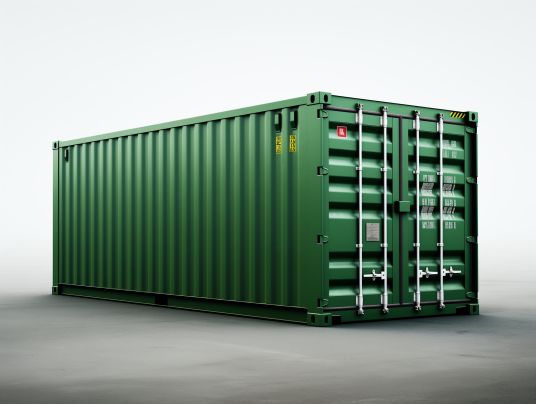
For most people, a 20ft standard container is the right size — it holds roughly the contents of a two-to-three bedroom home (about 160 sq ft of floor space) and fits on a standard driveway or yard. Choose a 9ft mini for tight spaces, a 40ft for commercial or agricultural volume, and a high cube when you need the extra foot of height. Here are the exact dimensions and best uses so you buy the right size once.
Shipping Container Dimensions at a Glance
| Size | Exterior (L × W × H) | Interior floor | Best for |
|---|---|---|---|
| 9ft mini | 9’ × 8’ × 8’6” | ~63 sq ft | Backyards, tight lots, small storage |
| 20ft standard | 20’ × 8’ × 8’6” | ~160 sq ft | Homes, small business, most buyers |
| 40ft standard | 40’ × 8’ × 8’6” | ~320 sq ft | Commercial, industrial, farm |
| 40ft high cube | 40’ × 8’ × 9’6” | ~320 sq ft | Tall items, max capacity |
All standard containers are 8 feet wide and standard height is 8’6”; a high cube adds one foot for 9’6” of total height. These dimensions follow the ISO 6346 standard, so a 20ft container from any supplier has the same footprint.
How to Choose the Right Size
Work through three questions:
1. What are you storing, and how much of it?
- A single room of furniture, seasonal gear, or tools → 9ft or 20ft.
- A full household, inventory, or equipment → 40ft.
- Tall items (appliances stacked, pallets double-high, machinery) → high cube for the extra height.
2. How much space do you have? A 20ft container needs about 22–24 feet of clear length to place, plus room for the delivery truck to swing the doors. A 40ft needs roughly 44 feet plus maneuvering room. On a tight urban lot, the 9ft mini often wins.
3. Will your needs grow? Buying a second container later means paying delivery twice. If you’re between sizes, the 40ft usually offers the best cost per square foot — you get double the space of a 20ft without paying double the price.
Size-by-Size Breakdown
9ft Mini
The compact option — about 63 sq ft. Ideal for backyard storage, small acreages, or anywhere a 20ft won’t fit. See the 9ft mini container.
20ft Standard
The all-rounder and our most popular size. Around 160 sq ft holds the contents of a typical 2–3 bedroom home. Fits most driveways and yards. See the 20ft standard.
40ft Standard
Double the length at ~320 sq ft. The workhorse for commercial storage, construction sites, and farms. See the 40ft standard.
40ft High Cube
Same 40ft footprint with an extra foot of height (9’6”). Best when vertical space matters — stacked pallets, tall equipment, or container conversions. See the 40ft high cube.
Prairie Tip: Think About Access, Not Just Volume
On a Saskatchewan yard or acreage, delivery access often decides the size as much as your storage volume does. A tilt-deck truck needs firm, level ground and clearance to slide the container off. Soft spring ground, tight gates, or overhead lines can rule out a 40ft even when you have the room for one. When in doubt, ask us — we deliver across the province and can advise what will actually fit your site.
Frequently Asked Questions
What is the most common shipping container size? The 20ft standard is the most popular — about 160 sq ft, enough for a 2–3 bedroom home’s contents, and it fits most yards and driveways.
What are the dimensions of a 20ft container? 20 feet long, 8 feet wide, 8’6” tall on the exterior, giving roughly 160 sq ft of interior floor space.
What’s the difference between a standard and high cube container? A high cube is one foot taller (9’6” vs 8’6”). The length and width are the same; you gain vertical space for tall items.
Should I buy a 20ft or 40ft container? Choose 20ft for home and small-business storage. Choose 40ft for commercial, industrial, or farm volume — it offers the best cost per square foot if you have the space and access.
Not sure which size fits your site? Get advice and a quote or call 1-844-473-2226. We deliver the right-sized sea can across Saskatchewan.
Ready to Get Started?
Whether you need a container for storage, construction, or a creative project, we're here to help you find the perfect solution.