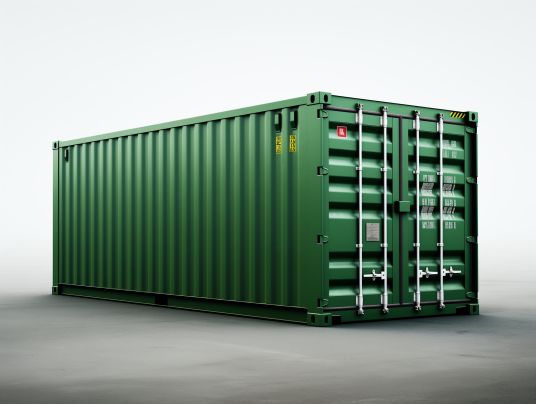
To prepare for a shipping container delivery, you need firm and level ground, a clear straight approach for the truck, overhead clearance, and a decided door direction. A tilt-deck truck rolls the container off the back, so it lands wherever your ground supports it — a little prep prevents an unlevel container, a rutted yard, or a truck that can’t reach the spot. Here’s the step-by-step.
Step 1: Choose the Right Ground
The container will sit where the ground is. Aim for:
- Firm and load-bearing — gravel or compacted soil is ideal. Avoid soft ground, fresh sod, or muddy areas that will rut under a loaded truck.
- Level — a level base keeps the doors operating properly and prevents twisting stress on the frame. Even a slight slope can make the doors bind.
- Well-drained — water pooling under a container causes rust over time. Slightly higher ground sheds water away.
Prairie tip: a simple gravel pad, or three or four pressure-treated timbers or railway ties under the corner castings, keeps the container level, off wet ground, and out of the spring melt. This small step also helps prevent condensation (“container rain”) inside.
Step 2: Clear the Approach
The delivery truck needs a straight run to back in and pull forward as the container slides off. Before delivery day:
- Move vehicles, trailers, and equipment out of the path.
- Allow roughly 60+ feet of straight, clear run for a 20ft container (more for a 40ft).
- Make sure gates and tree lines are wide enough — measure if you’re unsure.
Step 3: Check Overhead Clearance
When the tilt-deck raises, it stands tall. Make sure there are no power lines, branches, or eaves over the drop zone or the truck’s approach. This is the most commonly missed item — and the most important for safety.
Step 4: Decide Door Direction
Choose which way the container doors should face before it’s delivered. The doors are on one end; turning a placed container is a real job. Point them toward where you’ll load and unload most often.
Step 5: Mark the Spot
Flag or stake the exact spot where you want the container. Giving the driver a clear target means it lands where you want it the first time.
Step 6: Plan for the Season
Saskatchewan weather affects delivery:
- Spring: wet, thawing ground can be un-driveable for a loaded truck. Wait for it to firm up or lay a gravel approach.
- Winter: delivery is routine, but keep the drop zone and approach plowed and sanded for traction.
- Summer: usually ideal — just watch for soft spots after heavy rain.
Delivery-Day Checklist
- Ground is firm, level, and well-drained (pad or timbers ready)
- Straight approach cleared (60+ ft for a 20ft)
- No overhead lines or branches over the drop zone
- Door direction decided and communicated
- Spot marked
- Gates/access confirmed wide enough
- Site plowed/sanded if winter, or firm if spring
Frequently Asked Questions
What surface should a shipping container sit on? Firm, level, well-drained ground — ideally a gravel pad or pressure-treated timbers/railway ties under the corners to keep it level and off wet ground.
How much space do I need for delivery? About 60+ feet of straight clear run for a 20ft container (more for a 40ft), plus overhead clearance and room for the truck to maneuver.
Do I need to level the ground perfectly? It should be close to level so the doors work correctly and the frame isn’t stressed. Timbers under the corners let you fine-tune small differences.
Can the container be moved after it’s placed? Yes, but it requires the truck to return — so decide the spot and door direction before delivery to avoid paying twice.
Getting ready for a delivery? We’ll walk you through site requirements when you order. Request a quote or call 1-844-473-2226 — we deliver sea cans across Saskatchewan. See also how delivery works and what it costs.
Ready to Get Started?
Whether you need a container for storage, construction, or a creative project, we're here to help you find the perfect solution.